

Data Silos in SMBs: Impact on Growth and the Roadmap to Centralized Data

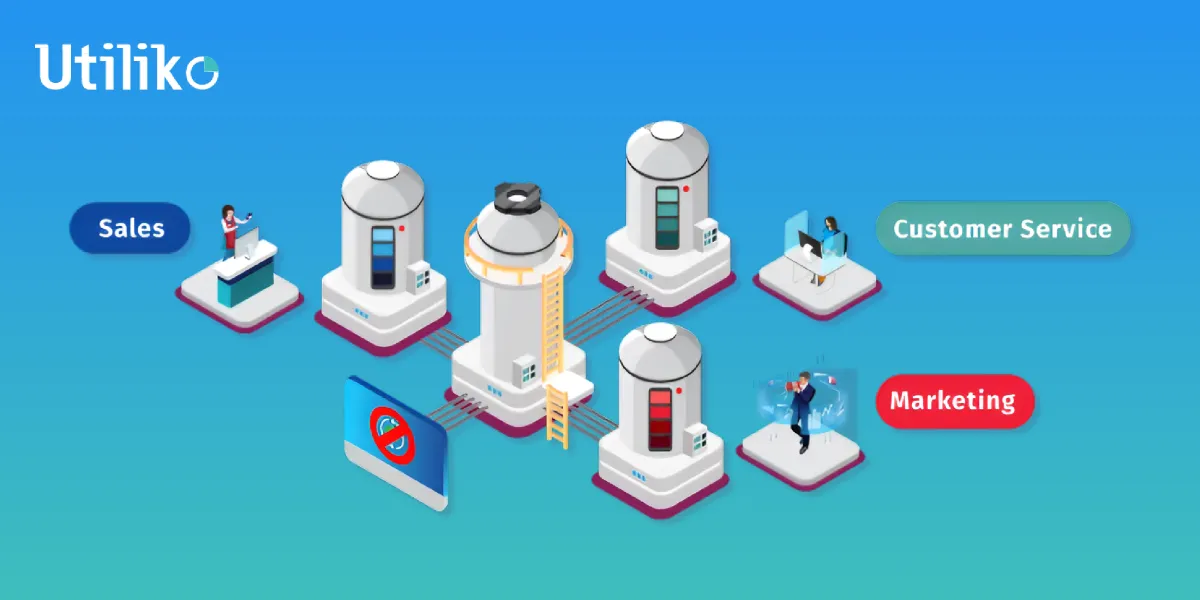
Around 40% of organizations struggle with data silos, slowing their ability to become truly data-driven. The operational impact is even more alarming, with up to 68% of collected data left completely unanalyzed. That means most businesses are making decisions based on only a fraction of the information they already own.
In this article, we’ll explore what data silos are and why breaking them is critical for your growth. We’ll also share a step-by-step guide about setting up your own centralized data system.
What Are Data Silos?
Data silos are fragmented collections of information that exist within different departments or systems in an organization—such as Sales, Finance, or HR—that do not easily connect or share data with one another.
When information is locked within separate tools or teams, it restricts collaboration, creates data duplication or inconsistencies, and prevents businesses from gaining a complete, organization-wide view. This lack of visibility makes it harder to generate meaningful insights and slows down effective decision-making.
What are Common Causes of Data Silos in SMB’s?
Common causes of data silos in small and medium businesses (SMBs) stem from a mix of technological, organizational, and cultural factors that result in information being isolated in separate systems or departments.
Technological Causes
- Incompatible Software Systems: Different departments often independently select the software that best fits their specific function (e.g., sales uses one CRM, marketing uses a separate analytics platform, and finance uses an on-premises accounting system) without considering integration needs.
- Legacy Systems: Older, inflexible systems can be difficult to connect with modern cloud-based applications, creating data islands that are hard to access or combine.
- Lack of Integration Strategy: The absence of a plan to connect disparate systems means data remains trapped in separate tools, requiring time-consuming manual efforts to reconcile information when needed.
- Shadow IT: Employees using unofficial tools, such as local spreadsheets, to manage data outside of formal systems creates unmonitored and disconnected data repositories.
Ignoring data silos doesn’t cause immediate failure—but it creates slow, compounding damage. When information is trapped in disconnected systems, leaders lose visibility, teams lose momentum, customers feel friction, and risks quietly multiply.
How do data silos impact decision-making in SMB’s Growth?
Data silos negatively impact SMBs by creating inefficiencies, increasing operational costs, limiting collaboration, and forcing leaders to make decisions based on incomplete or conflicting information. When critical business data is locked away in isolated systems, it stops being an asset and turns into a bottleneck—slowing growth and reducing competitiveness.
Here are just a few ways data silos impact businesses:
Incomplete Business View Due to Fragmented Data
When data exists across multiple systems, it becomes fragmented—small pieces of information spread across different databases and tools. Data analysts often struggle to stitch this information together to form a complete and accurate business picture. As a result, leadership teams are forced to rely on partial insights, which can create biased perspectives and lead to poor strategic decisions.
Duplicate Data Increases Costs
As data is collected and stored across different platforms, there is often no visibility into whether the same data already exists elsewhere. Teams rarely collaborate to align on a single source of truth, leading to redundant data storage. For SMBs, maintaining duplicate datasets across systems can be extremely costly, adding hundreds or even thousands of dollars in unnecessary storage, maintenance, and processing expenses.
Data Integrity and Consistency Challenges
As data silos grow, the risk of data falling out of sync increases significantly. For example, customer or usage data might be stored in local systems, spreadsheets, and third-party platforms simultaneously. Over time, discrepancies begin to appear.
Teams then spend valuable hours trying to identify errors, reconcile differences, and determine which data is accurate—wasting time that could be better spent on analysis or growth initiatives.
Increased Security Risks
According to IBM, the average cost of a data breach is around $4.4 million, a figure that can be devastating for SMBs. Data silos make security even harder to manage because sensitive information is spread across multiple locations with inconsistent protection measures. Different departments may follow different security practices, leaving gaps that attackers can exploit. The more fragmented the data, the more vulnerable the organization becomes.
What are the Best practices for managing data silos in SMBs?
- Step 1: Audit Your Tools – Identify where your data lives and where it gets stuck.
- Step 2: Define a Single Source of Truth – Decide which platform will serve as your primary data home.
- Step 3: Choose the Right Platform – Select an all-in-one system or a flexible integration-based solution.
- Step 4: Standardize Data Processes – Create naming conventions and access rules so everyone speaks the same data language.
- Step 5: Train Teams for Adoption – Technology works only when people use it consistently.
Managing data silos requires more than isolated fixes it demands a structured approach to data ownership, integration, and adoption. Platforms such as Utiliko are built to support SMBs in creating a unified data environment that aligns tools, processes, and teams.
Moving from Disconnected Data to an Integrated Business View: How Removing Data Silos Benefits SMBs
Data silos in SMBs often prevent small and medium businesses (SMBs) from fully using the data they already have. When information is spread across disconnected tools and departments, decision-making slows down, collaboration weakens, and growth opportunities are missed. By removing data silos, SMBs can achieve a unified view of their data—leading to faster decisions, better teamwork, improved efficiency, and greater business agility.
This transformation typically begins with centralized data systems and clear data governance, often supported by all-in-one business management software that brings operations, finance, sales, and customer data together in one place. The shift from isolated data to an integrated ecosystem enables SMBs to rely on consistent, trusted information and move toward true data-driven decision-making.
Immediate Benefits for Small and Medium Businesses (SMBs)
Informed Decision-Making
With a single source of truth, SMB leaders can analyze complete and accurate data instead of relying on fragmented reports. This leads to smarter decisions backed by real insights rather than assumptions.
Improved Collaboration Across Teams
When departments access the same data and metrics, collaboration improves. Sales, marketing, finance, and operations teams can align their efforts without confusion caused by conflicting numbers.
Increased Operational Efficiency
Removing data silos eliminates duplicate data entry and manual reconciliation. All-in-one business management software helps streamline workflows, saving time and reducing errors.
Lower Operational Costs
SMBs can reduce spending on redundant tools, data storage, and IT maintenance by consolidating systems and simplifying data management.
Why SMBs Are Moving Toward All-in-One Business Management Software
The benefits of removing data silos—better decisions, stronger collaboration, higher efficiency, and lower costs—often lead small and medium businesses (SMBs) to rethink how their systems are structured. Managing growth with multiple disconnected tools becomes increasingly complex, time-consuming, and expensive.
This is why many SMBs are now shifting toward all-in-one business management software—a model that centralizes data, processes, and teams within a single platform. Instead of stitching together multiple systems, SMBs gain a unified operational view that supports scalability, governance, and long-term agility.
To understand this shift in more detail, explore our in-depth guide:
Why Are SMBs Switching to All-in-One Management Software in 2026?
Strategic Advantages of Eliminating Data Silos in SMBs
- Greater Business Agility: Integrated data allows SMBs to respond quickly to market changes, customer needs, and operational challenges using real-time or near-real-time insights.
- AI and Innovation Readiness: A clean, centralized data foundation is essential for adopting AI and automation. By breaking down data silos, SMBs create the structure needed for future innovation.
- Empowered Business Users: With accessible and reliable data, teams can generate insights on their own without constantly depending on IT support, improving speed and productivity.
- Stronger Data Governance: Centralized systems make it easier to enforce data policies, maintain quality, and ensure consistency across the organization.
Frequently Asked Questions (FAQ)
Are there affordable tools for SMBs to centralize data storage?
Yes, there are several affordable options available for small and medium businesses (SMBs) to centralize data storage. Many SMBs choose scalable, cloud-based platforms that offer centralized data access without high upfront costs. All-in-one business management software is often a cost-effective choice, as it combines multiple functions—such as data storage, reporting, and workflow management—into a single system. This reduces the need for multiple tools and helps SMBs manage data more efficiently as they grow.
What software solutions help SMBs eliminate data silos?
SMBs can reduce or eliminate data silos by using software solutions that integrate data across departments and systems. Common options include all-in-one business management software, centralized databases, and integration platforms that connect existing tools. These solutions help create a single source of truth, improve data visibility, and ensure teams work with consistent and accurate information, making collaboration and decision-making easier.
Can all-in-one business management software help eliminate data silos?
Yes. All-in-one business management software freezes data and workflows into a single platform. This helps SMBs create a single source of truth, improve visibility across teams, and reduce dependency on multiple disconnected tools.
How does Utiliko help SMBs overcome data silos?
Utiliko is designed to help SMBs centralize their business data, integrate workflows, and create a unified data environment. By reducing reliance on disconnected tools, Utiliko supports better visibility, collaboration, and data-driven decision-making.

More articles
 Blog How to Choose the Best CRM for Sales Team
A rep runs a great discovery call on Monday. By Thursday, nobody can say for certain who owns…
Blog How to Choose the Best CRM for Sales Team
A rep runs a great discovery call on Monday. By Thursday, nobody can say for certain who owns…
 Blog CRM Data Migration: Move Your Data Without Losing a Lead
You’ve decided to let the spreadsheet go and begin the CRM data migration. Somewhere in that Excel file…
Blog CRM Data Migration: Move Your Data Without Losing a Lead
You’ve decided to let the spreadsheet go and begin the CRM data migration. Somewhere in that Excel file…
 Blog CRM Reporting 101: 10 Reports To Run Every Week
You have access to decent CRM reporting, but you don’t run the right reports on a consistent weekly…
Blog CRM Reporting 101: 10 Reports To Run Every Week
You have access to decent CRM reporting, but you don’t run the right reports on a consistent weekly…